Floral Mug Bloom: A Review for Serious Stitching
As a designer who spends most days translating digital files into real, threaded projects, I approach every new design with a practical eye. It’s not just about how pretty it looks on screen; it’s about how it will live as stitches on fabric, how it will hold up on a product, and how it will connect with the person who ultimately receives it. When I look at Floral Mug Bloom, I’m immediately thinking about its journey from screen to hoop to finished product.
The Immediate Charm and Practical Personality
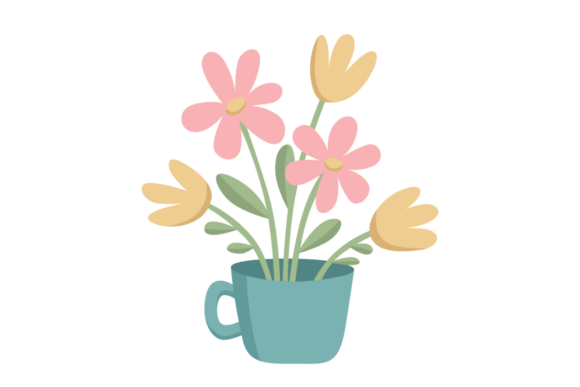
The first impression is, of course, its cozy, spring-ready charm. The composition of pastel tulips and daisies sprouting from a teal mug isn’t just adorable; it’s narratively clear. This isn’t a complex, abstract floral. It’s a friendly, approachable scene with a defined shape and a relaxed layout. The detail level feels intentional—likely enough to give the flowers character without becoming overly dense or finicky in embroidery. Its visual personality is warm and gift-oriented, which tells me it naturally belongs to projects meant to convey a personal touch: a custom kitchen towel for a friend, a celebratory pillow cover, or a boutique-ready tote bag.
Where This Design Finds Its Best Home
Let’s talk real-life application. I’m picturing a specific scenario: a client requests a personalized gift for a mother who loves her morning tea. An embroidered linen tea towel or a canvas tote bag featuring this design feels perfectly aligned. The theme is instantly recognizable and emotionally resonant.
For custom apparel, like a relaxed-fit sweatshirt or a baby’s knit blanket, the Floral Mug Bloom design offers a focal point that’s sweet without being overly childish. For small business merchandise, such as an embroidered patch or an apron sold in an Etsy shop, it provides a complete, sellable scene that doesn’t require extra explanation. It’s a ready-made story for craft fair products or holiday gifts. In digital product previews or printable mockups for a creative entrepreneur, this graphic serves as a strong, cohesive asset that customers can easily visualize on a finished item.
Projects That Might Require a Second Look
This design’s charm comes from its defined shape and presumably some smaller floral details. That means on very small hoop sizes, some of those delicate lines in the tulips or daisy centers could become less distinct. Stitching it onto textured fabrics like a loose-weave towel or a stretchy fabric like a t-shirt neckline will demand careful stabilizer choice to keep the mug’s clean outline sharp.
Dark fabric backgrounds are a classic consideration. The pastel palette described is light and cheerful. If you’re planning to stitch this onto a navy cap or a black sweatshirt, you must think critically about thread color contrast. Will those pastels pop, or will they get lost? A test on scrap fabric is essential. Similarly, on curved surfaces like caps, the circular mug shape may need slight adjustments in placement to look balanced. The design seems forgiving, but these are the practical checks a professional makes.
How This Embroidery File Elevates a Finished Product
Beyond just looking pretty, a good embroidery design adds tangible value. Floral Mug Bloom, when stitched well, enhances product value through its completeness. It’s not a fragment; it’s a whole, thoughtful illustration. This builds customer trust and professionalism—it shows you chose a design with care. For a handmade presentation, it offers that ideal blend of homemade warmth and refined execution.
Its high giftability and immediate recognition as a spring or Mother’s Day theme directly boost buyer engagement. A customer browsing a small shop doesn’t have to decipher the motif; they understand it and connect with it quickly. For brand consistency, if your shop specializes in cozy, home-centric items, this design fits neatly into that narrative without forcing a match.
A Designer’s Practical Notes Before Hooping Up
Before you run this embroidery file, here’s my standard checklist, applied to Floral Mug Bloom. First, always test the design on scrap fabric first, using a similar material to your final project. This reveals everything: how the stitch density behaves, whether small details like the mug handle or flower centers stay crisp, and how your chosen thread colors interact.
Please review the hoop size recommendation for this specific file if it’s provided. Don’t assume. Confirm the design’s compatibility with your project’s dimensions. Inspect small details in a black and white mockup to see if they hold their form without color. Compare light and dark fabric backgrounds digitally before committing thread.
Crucially, use proper stabilizer. A design with a solid mug shape and floral fills may combine satin stitch outlines and fill stitch areas; the right stabilizer prevents puckering and keeps that teal mug looking smooth. Finally, a non-technical but vital step: confirm licensing before selling finished items or digital products. Understand whether this machine embroidery design is cleared for commercial embroidery projects or is for personal use only. This protects your craft business.
The Final Stitch: A Confident Choice for Cozy Projects
After this practical walkthrough, I see Floral Mug Bloom as a confident choice for specific, heartfelt projects. It’s not a one-size-fits-all design; its strength lies in its thematic clarity and emotional appeal. It would be an excellent candidate for that embroidered tote bag for a garden club friend, the centerpiece on a nursery decor pillow, or a best-selling embroidered patch in a spring-themed Etsy collection.
Its success on an item—whether a custom apparel piece, a holiday embroidery gift, or small shop product—will hinge on that practical groundwork: testing, stabilizing, and placing it on the right canvas. But if you do that groundwork, this design will stitch out as a charming, professional, and deeply likable piece. It turns a simple embroidery project into a story told in thread, which is exactly what a good finished product should do.